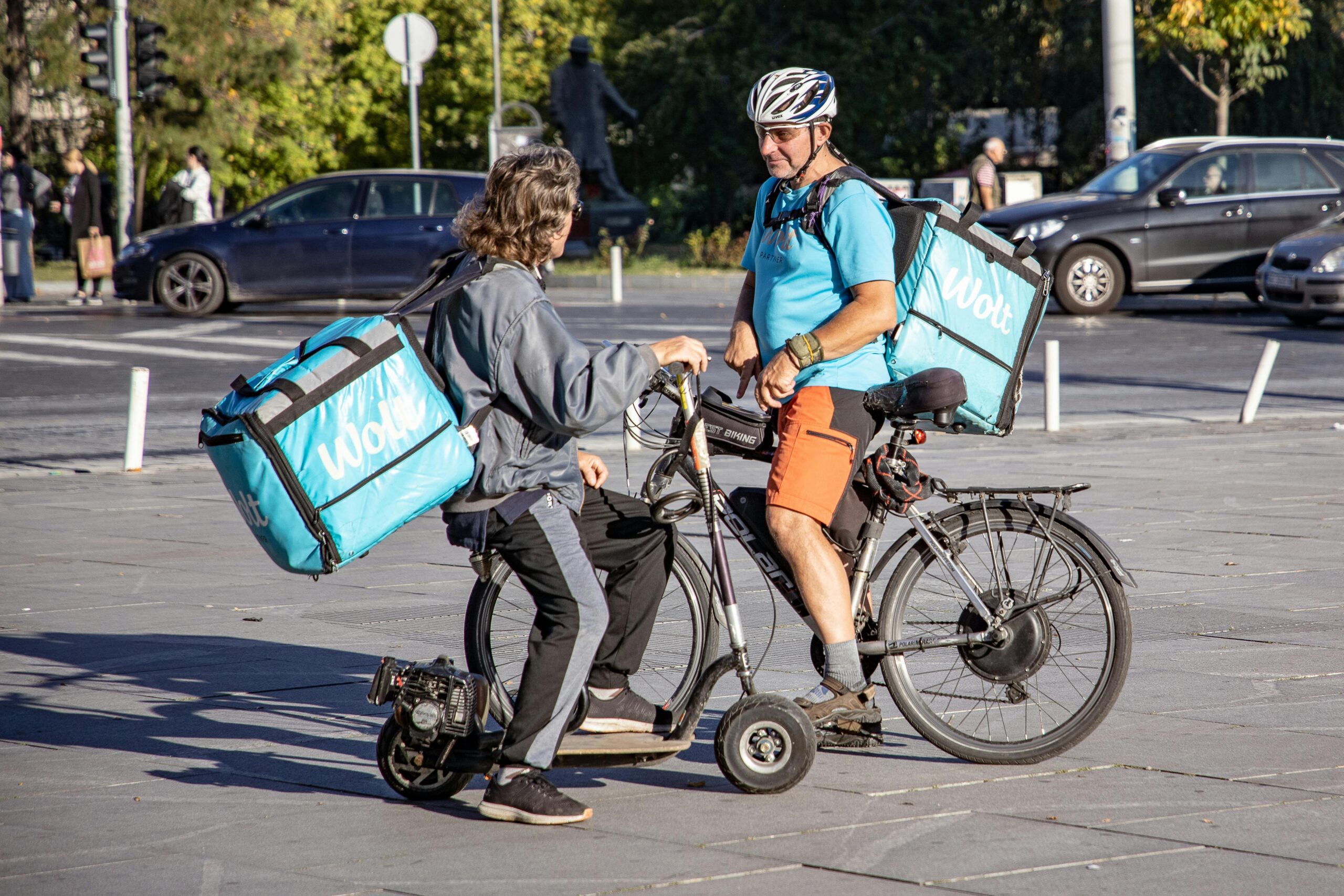
Think you need a car to make money with delivery apps? Not necessarily. While many gig workers rely on cars, a growing number are making money on two wheels — delivering food, groceries, and small packages by bike, e-bike, or scooter.
Data from delivery platforms shows the shift clearly. In the United States and Canada, the share of deliveries made by bikes, e-bikes or scooters has tripled since 2022 on major platforms such as DoorDash. The trend is particularly pronounced in dense urban areas such as New York, Chicago, San Francisco and Washington, D. C.
Everybody wins
The reason bike and scooter-based delivery is soaring is because it benefits everyone. Cities like it because it reduces congestion at peak traffic hours, such as lunch and dinner times.
Restaurants and their customers like it because two-wheel deliveries can be faster than deliveries by car. That means diners get their meals faster while they’re still hot.
The speed of delivering via two wheels is also a major plus to the freelancers doing the deliveries. After all, you get paid by the delivery, not by the hour. So, if it takes less time, you make comparatively more. Moreover, customers are more likely to be satisfied — and tip — when you’re fast, too. Meanwhile, you’re saving the cost of gas and car insurance.
What you need to know
But the job also comes with trade-offs. There are physical demands. Demand is highest when the weather is at its worst, which subjects you to freezing temperatures and rotten road conditions. And, of course, pay is unpredictable, relying on both demand and customer tips.
What do you need to know about making money on two wheels?
The process
Most riders sign up through app-based delivery platforms such as DoorDash, Uber Eats, Grubhub, Instacart or GoPuff. These platforms typically require:
- A smartphone capable of running the delivery app
- Identity verification and a background check
- A bike, e-bike, or scooter (depending on the platform and city)
- An insulated delivery bag or backpack
Notably, where freelancers wanting to deliver with a car also need auto insurance and a driver’s license, these requirements are waived for those delivering on two wheels. That can make the onboarding process a little quicker and easier.
Once approved, riders can log in and start accepting orders within the app.
Practical issues
Two-wheel deliveries primarily make sense when they’re short hauls — both the pick-up and delivery are within a few miles of each other. So delivering on two wheels is only going to work for a freelancer who is within a few miles of city amenities, such as supermarkets and restaurants.
Moreover, if you want to deliver groceries, as well as restaurant meals, you’re likely to need an expensive e-bike or have the strength to cart heavy groceries in a bike basket. This can keep you in great shape. But it’s also a physical demand that many people can’t meet.
Finally, because you (and, possibly, your bike) have a limited capacity to haul big orders, you need to be careful about the gigs you accept. Sites like Instacart and GoPuff that pick-up and deliver groceries can also be problematic, when a customer asks for additional items while you’re shopping.
The benefits
That said, there’s no gas or parking expenses. And, because drivers can use short cuts, bike lanes and, sometimes, sidewalks, they can deliver faster and more efficiently.
A study by Axios estimates that deliveries made via bike or scooter were done 10% faster and, thus, delivered better hourly pay to the freelancer doing the work.
Where to Find Gigs
Most bike delivery work comes through national delivery platforms. The most popular delivery apps and what they specialize in are:
Uber Eats
Uber Eats delivers restaurant takeout, fast food, groceries, and convenience items. Most bike- friendly orders are short restaurant runs in dense neighborhoods that earn riders $15 to $25 per hour before expenses. However, hourly earnings are affected by location, time of day, order volume, and tips. Riders say lunch and dinner shifts perform best.
DoorDash
DoorDash delivers food, groceries, alcohol, and other convenience items. Pay typically ranges from $2 to $10+ per order, depending on distance, time, and demand. The platform frequently offers promotions that can boost earnings.
Grubhub
Just like Uber Eats and DoorDash, Grubhub delivers restaurant takeouts, groceries, and items you can buy from convenience stores. Most riders make about $14 per hour, according to Indeed. But pay can rise to $20 in high-demand cities, depending primarily on tips.
Instacart
Instacart delivers groceries, food, household items, and convenience items. Full-service shoppers earn $7–$10 per batch, depending on order size, item type, distance, and effort.
Gopuff
Gopuff delivers convenience items like snacks, drinks, household essentials, over-the-counter medicine, and alcohol. Unlike most delivery apps, it uses its own local micro-fulfillment centers instead of third-party stores.
Riders pick up orders directly from these centers and deliver them to customers. According to Zip Recruiter, the pay range is $10.10 to $30.05 per hour.
If two-wheeled delivery gigs appeal to you, SideHusl.com recommends that you sign up for all five of these platforms to increase the chance of getting an appropriate gig during hours that work for you.





Leave a Reply